Jazz Guitarists
Famous Jazz Guitarists: 12 Players Every Guitar Student Should Know
The most influential jazz guitarists include Django Reinhardt, Charlie Christian, Wes Montgomery, Jim Hall, Joe Pass and Pat Martino, together with Oscar Alemán, Freddie Green, Herb Ellis, Barney Kessel, Kenny Burrell and Russell Malone. Below, in order of birth, is who each one was and what a guitar student can learn from him, with links to full biographies.
The history of jazz guitar is a story of a few musicians who changed what the instrument could do. The twelve guitarists below, in order of birth, are the ones we recommend every student hear and study. For each one you get a short portrait, what to learn from him and a link to a full biography.
Oscar Alemán (1909–1980)
The great swing guitarist led Josephine Baker’s band in 1930s Paris, played in the same scene as Django Reinhardt and became the star of Buenos Aires jazz. Learn from him: bluesy bends, pedal notes and pure showmanship. Read the full Oscar Alemán biography.
Django Reinhardt (1910–1953)
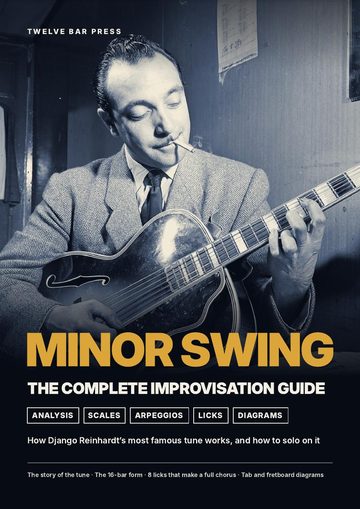
The Belgian-born Romani guitarist lost the use of two fingers of his left hand in a fire and still became the first great European jazz musician. Learn from him: arpeggios, chromatic runs, la pompe rhythm and fearless phrasing. Read the full Django Reinhardt biography.
Freddie Green (1911–1987)
For about fifty years the heartbeat of the Count Basie Orchestra, he almost never took a solo and still influenced every rhythm guitarist after him. Learn from him: four-to-the-bar comping and the art of making a band swing. Read the full Freddie Green biography.
Charlie Christian (1916–1942)
In less than three years with Benny Goodman he turned the electric guitar into a solo voice and jammed at Minton’s Playhouse with the musicians who created bebop. Learn from him: horn-like lines, riffs and arpeggios. Read the full Charlie Christian biography.
Herb Ellis (1921–2010)
The Texan who replaced Barney Kessel in the Oscar Peterson Trio swung as hard as anyone in jazz and thought in chord shapes, not scales. Learn from him: blues phrasing, double stops and rhythm guitar. Read the full Herb Ellis biography.
Wes Montgomery (1923–1968)
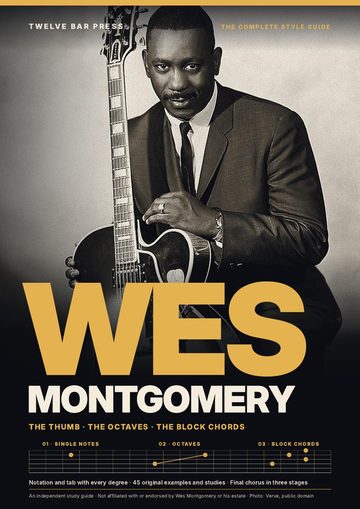
Self-taught, playing with his thumb so he would not wake the neighbors, he built solos in three stages — single notes, octaves, block chords — and became the most imitated jazz guitarist of the 1960s. Read the full Wes Montgomery biography.
Barney Kessel (1923–2004)
Charlie Parker sideman, Oscar Peterson trio member, Poll Winner and Wrecking Crew studio guitarist: one of the most complete guitarists in jazz. Learn from him: bebop lines and chord solos. Read the full Barney Kessel biography.
Joe Pass (1929–1994)
After years lost to addiction, he made a comeback at 33 and, with the album Virtuoso, showed that one guitar could play melody, bass and harmony at once. Learn from him: walking bass and chords, and chord melody. Read the full Joe Pass biography.
Jim Hall (1930–2013)
Duo partner of Bill Evans and Ron Carter, sideman of Sonny Rollins and model for generations of modern players, he showed that a solo can tell a story. Learn from him: motifs, space and comping. Read the full Jim Hall biography.
Kenny Burrell (born 1931)
The Detroit guitarist behind Midnight Blue, Jimmy Smith’s organ hits and Guitar Forms combined blues feeling with bebop clarity, and later led Jazz Studies at UCLA. Learn from him: soulful blues phrasing. Read the full Kenny Burrell biography.
Pat Martino (1944–2021)
A Philadelphia prodigy of the organ trios, he lost his memory after brain surgery in 1980 and relearned the guitar from his own records. Learn from him: long, flowing lines and minor conversion. Read the full Pat Martino biography.
Russell Malone (1963–2024)
Self-taught in Georgia on gospel and the blues, he played with Jimmy Smith, Harry Connick Jr., Diana Krall, Ron Carter and Sonny Rollins. Learn from him: soulful melody, octaves and swing. Read the full Russell Malone biography.
How to study a jazz guitarist
- Listen to one album many times until you can sing the main themes and a few phrases of the solos.
- Sing a short phrase, then find it on the guitar by ear.
- Learn one complete solo chorus by ear and play it along with the record.
- Extract the vocabulary: which arpeggios, rhythms and devices does the player use? Write them down.
- Use one idea in your own solos the same week, in a different key and on a different tune.
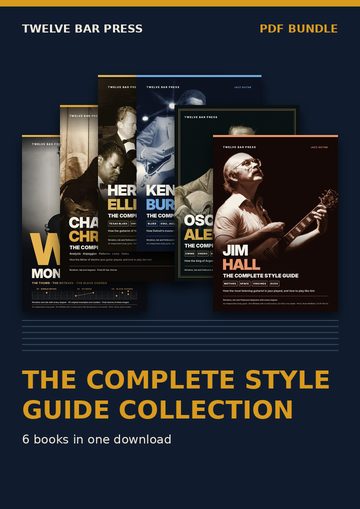
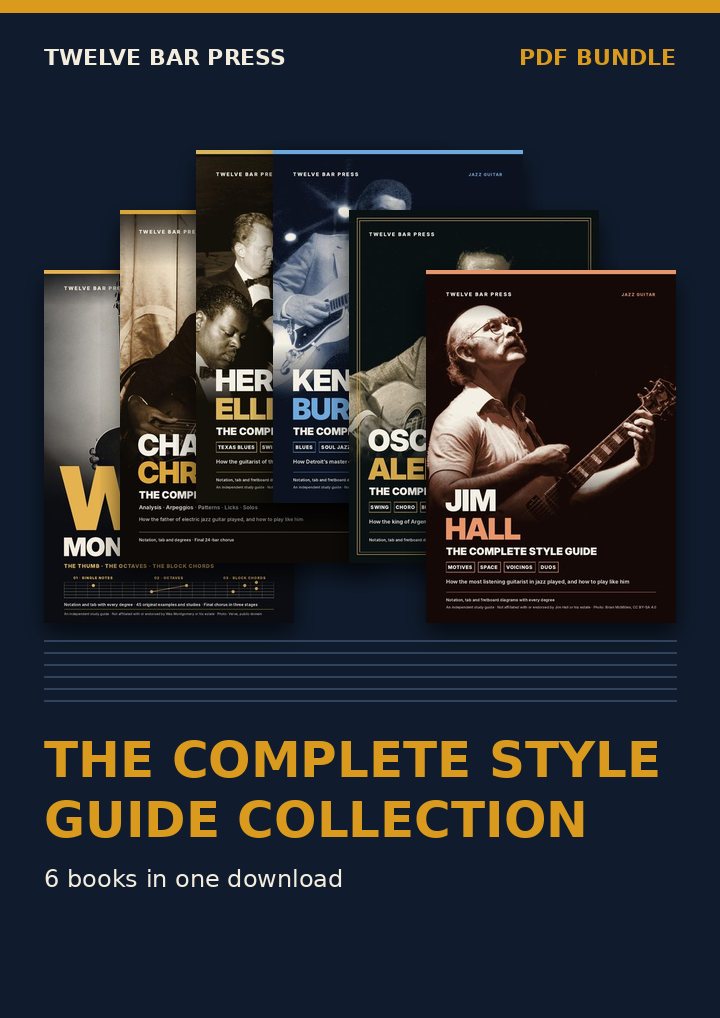
Our Complete Style Guide Collection follows this process for six of these guitarists, with examples in notation and TAB. Then continue with the lessons on how to improvise on jazz guitar.
Frequently asked questions
Who is the greatest jazz guitarist of all time?
There is no single answer. The names cited most often are Django Reinhardt, Charlie Christian and Wes Montgomery, because each one changed how the guitar is played in jazz. Jim Hall, Joe Pass and Pat Martino are close behind for many musicians.
Who made the guitar a solo instrument in jazz?
Charlie Christian, with the Benny Goodman Sextet from 1939 to 1941, made the electric guitar a solo voice. In Europe, Django Reinhardt had already shown in the 1930s what an acoustic guitar could do as a lead instrument.
Which jazz guitarist should a beginner listen to first?
Charlie Christian, Wes Montgomery and Kenny Burrell are excellent starting points: their lines are clear, swinging and close to the blues.