Jazz Guitarists
Oscar Alemán: Biography of the Swing Guitarist
Oscar Alemán (1909–1980) was an jazz guitarist, singer and entertainer, one of the great swing guitarists of the 1930s. Born in Machagai, Chaco, he worked in Brazil and Buenos Aires, led Josephine Baker’s band in Paris and returned home during World War II, where he became the country’s leading jazz musician. His style mixes swing, blues bends and Latin American rhythm.
- Born
- February 20, 1909, Machagai, Chaco
- Died
- October 14, 1980, Buenos Aires
- Instruments
- Guitar (Selmer-Maccaferri and National resonator), cavaquinho, vocals
- Known for
- Leading Josephine Baker’s band in Paris; swing guitar in Buenos Aires
- Style
- Swing, with blues bends, pedal notes and Latin American rhythm
Early life: from Chaco to the streets of Santos
Oscar Alemán was born on February 20, 1909, in Machagai, in the northern province of Chaco. As a child he played the cavaquinho, a small Brazilian four-string guitar, in his family’s music group, then switched to the guitar. Orphaned at ten, he survived by playing music and dancing on the streets of Santos, in Brazil.
In Brazil he formed a guitar duo, Los Lobos, with the Brazilian guitarist Gastón Bueno Lobo. In 1925 the duo moved to Buenos Aires, worked in theater and on records, and accompanied singers of the tango world. It was a musical school no conservatory could offer: Brazilian rhythm, popular song and the art of entertaining a live audience.
Europe and Josephine Baker
In 1929 the duo toured Europe, and Alemán stayed behind in Madrid as a soloist. In the early 1930s he discovered American jazz through the records of the guitarist Eddie Lang and the violinist Joe Venuti, and moved to Paris. There the star Josephine Baker hired him to lead her band, the Baker Boys, at the Café de Paris.
Paris in the 1930s was the European capital of jazz. Alemán heard and played with visiting American musicians and moved in the same scene as Django Reinhardt. He recorded swing tunes under his own name, sang, and became known for a stage act that mixed virtuoso guitar with humor and dance.
Return to Buenos Aires
The German invasion of France in World War II sent Alemán back home. In Buenos Aires he became the leading figure of local jazz: he played a long residency at the Alvear Palace Hotel, led a swing quintet and a nine-piece orchestra, and had a hit with “Rosa Madreselva,” a Spanish-language version of “Honeysuckle Rose.” He stayed popular into the late 1950s. In the 1970s a new generation rediscovered him: he recorded again in 1972, his old recordings were reissued, and he toured and appeared on television. He died in Buenos Aires on October 14, 1980.
The Oscar Alemán sound: what defines his style
Alemán played a Selmer-Maccaferri guitar — the same model as Django — and also a National tri-cone resonator, often with a thumb pick and his fingers. His swing guitar style is easy to recognize once you know what to listen for:
- Pedal notes: a repeated note held against a moving line, which creates tension and drive.
- Unison bends: bending one string up to the pitch of the next, a blues sound unusual in 1930s European swing.
- Chromatic falls and diminished shapes borrowed from the swing vocabulary of the time.
- Latin American rhythm in his accompaniment, from his years in Brazil.
- Humor and showmanship: quotes, surprises and phrases built to make an audience smile.
Essential recordings
- “Hawaianita” (Buenos Aires, late 1920s) — the early, acoustic Alemán.
- “St. Louis Stomp” (Paris, late 1930s) — hot swing guitar in the European style.
- “Doing the Gorgonzola” (Paris, 1939–1940) — humor and swing together.
- “Rosa Madreselva” — his Buenos Aires hit, a Spanish version of “Honeysuckle Rose.”
- Swing Guitar Masterpieces (compilation, 1998) — the best single introduction to his recordings.
What guitarists can learn from Oscar Alemán
- Use a pedal note against a descending line over a dominant chord: it is an instant swing sound.
- Practice unison bends on strings 2 and 3 and use them as a climax, not in every phrase.
- Think like an entertainer: vary the energy of a solo and surprise the listener at least once per chorus.
- Learn rhythm changes the swing way, with short, punchy chords — the comping lesson in our style guide starts there.
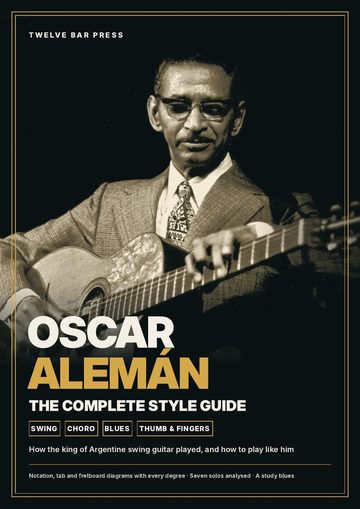
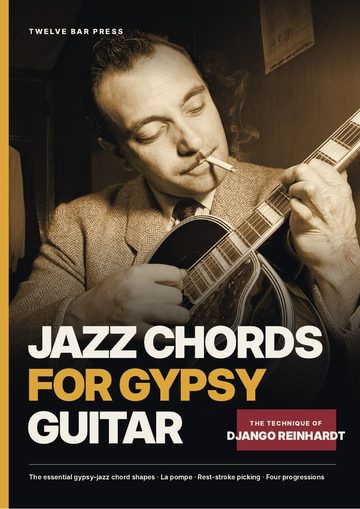
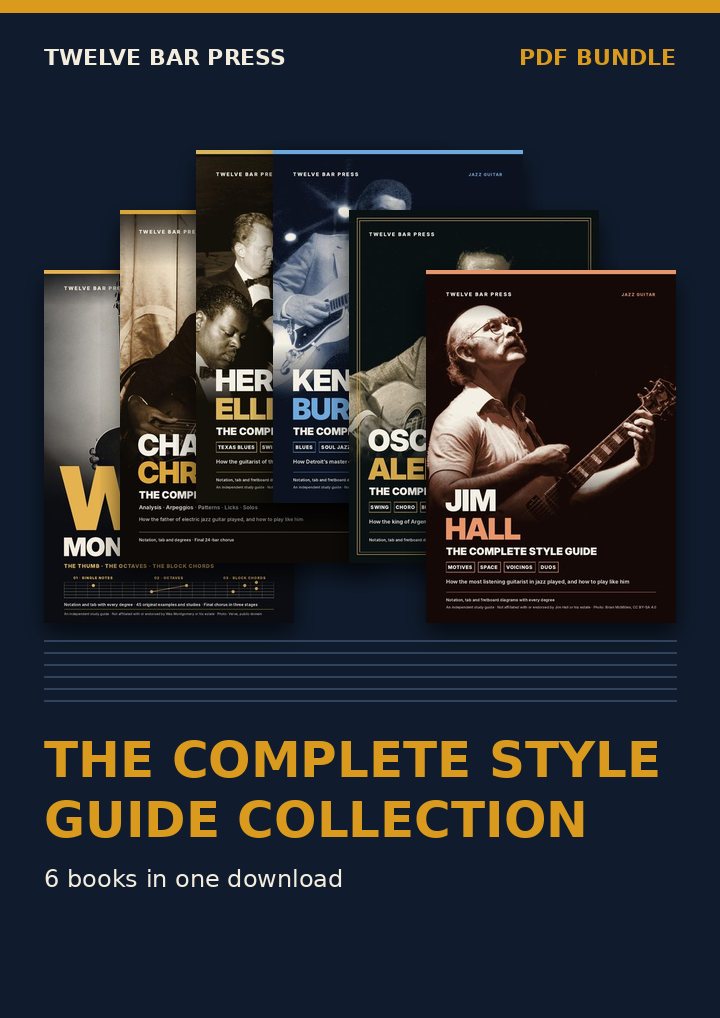
Our Oscar Alemán Swing Guitar Style Guide teaches his devices one by one, with seven studies on the harmony of his recordings. If you love the Paris swing sound, continue with Django Reinhardt and Jazz Chords for Gypsy Guitar.
Frequently asked questions
Who was Oscar Alemán?
An swing guitarist and entertainer (1909–1980) who led Josephine Baker’s band in Paris in the 1930s and became the leading jazz musician in his home country after World War II.
Did Oscar Alemán play with Django Reinhardt?
They worked in the same Paris jazz scene in the 1930s and used the same model of Selmer-Maccaferri guitar, but Alemán’s style was his own, with blues bends and Latin American rhythm.
What guitar did Oscar Alemán play?
His main guitar was a Selmer-Maccaferri, the model associated with Django Reinhardt. He also played a National tri-cone resonator guitar, often with a thumb pick and fingers.