Jazz Guitarists
Kenny Burrell: Biography of the Master of Blues and Soul Jazz Guitar
Kenny Burrell (born 1931) is an American jazz guitarist from Detroit, known for his warm tone and blues-rich, soulful style. He made his recording debut with Dizzy Gillespie in 1951, recorded classic Blue Note albums such as Midnight Blue (1963), worked with organist Jimmy Smith and made Guitar Forms (1965) with Gil Evans. In 1996 he became Director of Jazz Studies at UCLA, and he was named an NEA Jazz Master in 2005.
- Born
- July 31, 1931, Detroit, Michigan
- Full name
- Kenneth Earl Burrell
- Known for
- Midnight Blue; soul jazz; work with Jimmy Smith
- Teaching
- Director of Jazz Studies at UCLA from 1996
- Honor
- NEA Jazz Master (2005)
Early life in Detroit
Kenneth Earl Burrell was born on July 31, 1931, in Detroit, a city full of jazz in the 1940s and 1950s. His influences were both jazz and blues guitarists: Charlie Christian, Oscar Moore, Django Reinhardt, T-Bone Walker and Muddy Waters. While still a student at Wayne State University, he made his recording debut in 1951 with Dizzy Gillespie’s sextet. After graduating in 1955, he toured with the Oscar Peterson trio.
New York, Blue Note and Midnight Blue
In New York Burrell quickly became one of the most recorded guitarists in jazz, as a leader and as a sideman. On Blue Note he released Introducing Kenny Burrell (1956) and, above all, Midnight Blue (1963), with Stanley Turrentine on tenor saxophone — one of the defining albums of soul jazz and the home of “Chitlins con Carne.” He also recorded with John Coltrane in 1958 (Kenny Burrell & John Coltrane) and with countless other leaders.
His partnership with the organist Jimmy Smith produced some of the most popular jazz records of the 1960s, including Organ Grinder Swing (1965). In the same year he recorded Guitar Forms with the arranger Gil Evans, a showcase of his range from blues to classical guitar.
Teacher and Ellington scholar
Burrell has been an important educator. From 1978 he taught a course at UCLA on the life and music of Duke Ellington, who called him his favorite guitar player, and in 1996 he became Director of Jazz Studies at the UCLA Herb Alpert School of Music. He was named an NEA Jazz Master in 2005.
The Kenny Burrell sound: what defines his style
- Blues feeling in every phrase: pentatonic ideas, bends and the move from minor to major 3rd.
- Bebop clarity: clean lines through the changes, never cluttered.
- Rhythm and lead together: chords and single notes mixed, a skill from playing with organ trios.
- Double stops and short riffs that answer the band.
- A warm, round tone on a hollow-body guitar, at moderate volume.
Essential recordings
- Midnight Blue (1963) — the soul-jazz classic, with “Chitlins con Carne.”
- Introducing Kenny Burrell (1956) — his Blue Note debut.
- Kenny Burrell & John Coltrane (recorded 1958) — guitar meets tenor saxophone.
- Organ Grinder Swing (1965, with Jimmy Smith) — the organ-trio sound.
- Guitar Forms (1965, with Gil Evans) — his range in one album.
What guitarists can learn from Kenny Burrell
- Bring the blues into every jazz solo — but resolve it to chord tones.
- Learn to comp and solo at once, as he did with organists.
- Use double stops and short riffs to build intensity.
- Study a whole album, Midnight Blue, rather than isolated licks.
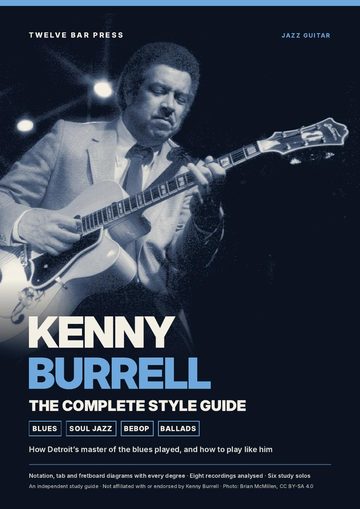
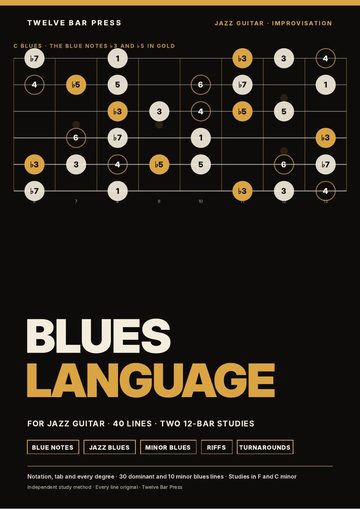
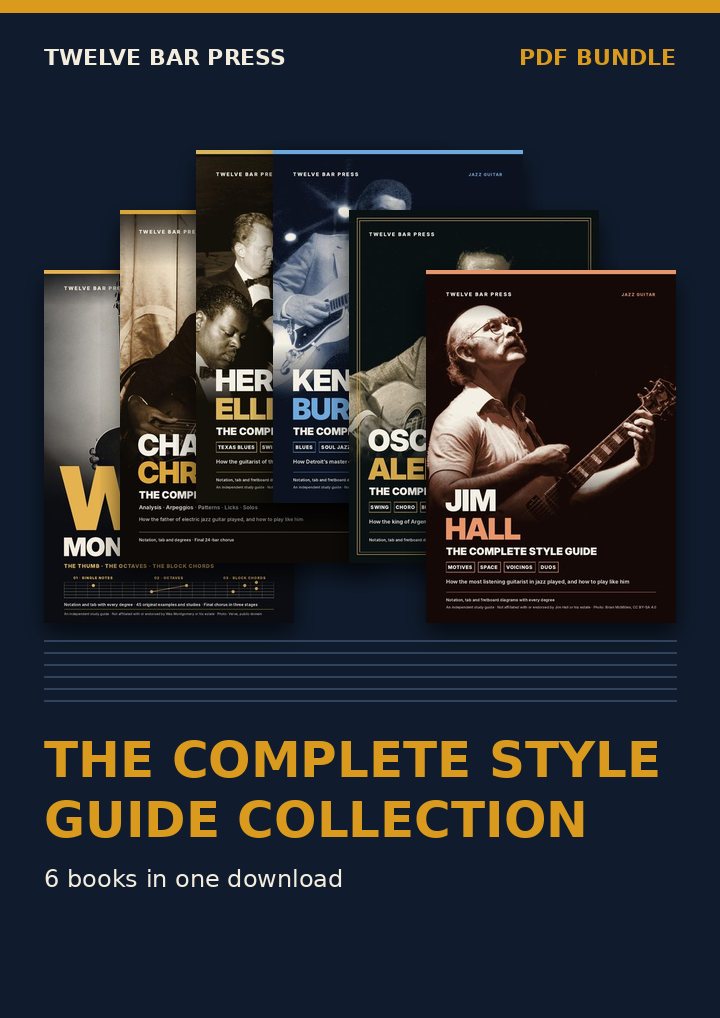
Our Kenny Burrell Guitar Style Guide teaches his blues vocabulary, rhythm and lead together, and includes a complete lesson on “Chitlins con Carne.” For more blues in a jazz context, see Blues Language for Jazz Guitar.
Frequently asked questions
What is Kenny Burrell’s most famous album?
Midnight Blue (Blue Note, 1963), with Stanley Turrentine, is his best-known album and a classic of soul jazz.
Did Kenny Burrell play with John Coltrane?
Yes. They recorded together in 1958; the album was released as Kenny Burrell & John Coltrane.
What did Duke Ellington say about Kenny Burrell?
Ellington called Burrell his favorite guitar player. Burrell later taught a UCLA course on Ellington’s life and music.