Jazz Guitar Lessons
How to Improvise Over Chord Changes in Jazz: Guide Tones, Target Notes and Approach Notes
To improvise over chord changes in jazz, aim for the notes that define each chord — its 3rd and 7th, the guide tones — and land on them when the chord changes. Connect the end of one chord to the start of the next by the smallest possible step, usually a half step, and use approach notes and enclosures to make those landings sound strong. This lesson shows each technique with notation and TAB.
Why one scale for the whole tune does not work
Many guitarists come to jazz from rock or blues, where one pentatonic scale can cover a whole song. In jazz that habit breaks down quickly. A standard can change key three or four times in 32 bars, and the chords change every bar or even every two beats. If you keep playing the same scale, some notes will clash with the chord of the moment and, worse, your lines will not describe the harmony. The listener hears a solo floating on top of the music instead of moving with it.
“Playing the changes” means the opposite: your melody makes the chord progression audible. A good jazz line would let a listener guess the chords even if the band stopped playing. The tools below are how you get there.
What makes a chord sound: the 3rd and the 7th
Of the four notes of a seventh chord, two do most of the work. The 3rd tells you whether the chord is major or minor. The 7th tells you whether it is a major seventh, a dominant seventh or a minor seventh chord. The root is usually played by the bass, and the 5th is the same in most chords, so it adds little information.
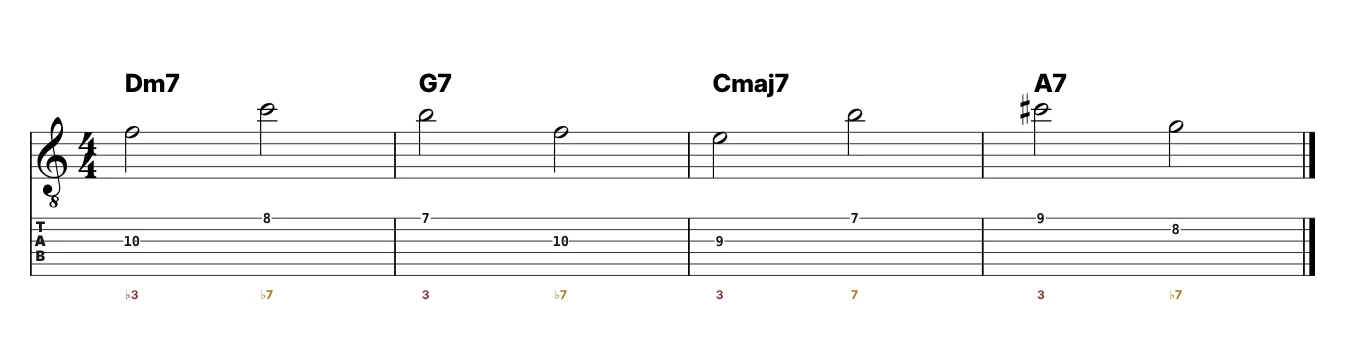
These two notes are called guide tones. If you can find the 3rd and the 7th of every chord in a tune, you already know the most important notes of your solo.
| Chord | 3rd | 7th | What it tells you |
|---|---|---|---|
| Dm7 | F | C | minor 3rd + minor 7th = minor seventh |
| G7 | B | F | major 3rd + minor 7th = dominant seventh |
| Cmaj7 | E | B | major 3rd + major 7th = major seventh |
| A7 | C♯ | G | dominant seventh leading to D minor |
Guide-tone lines: the skeleton of every jazz line
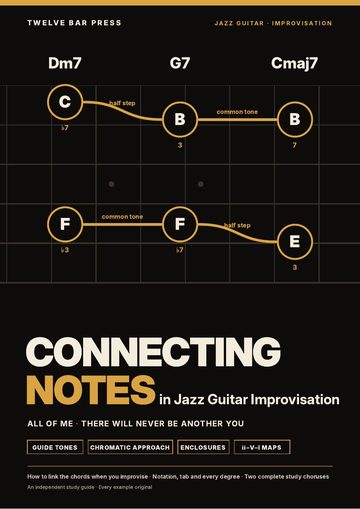
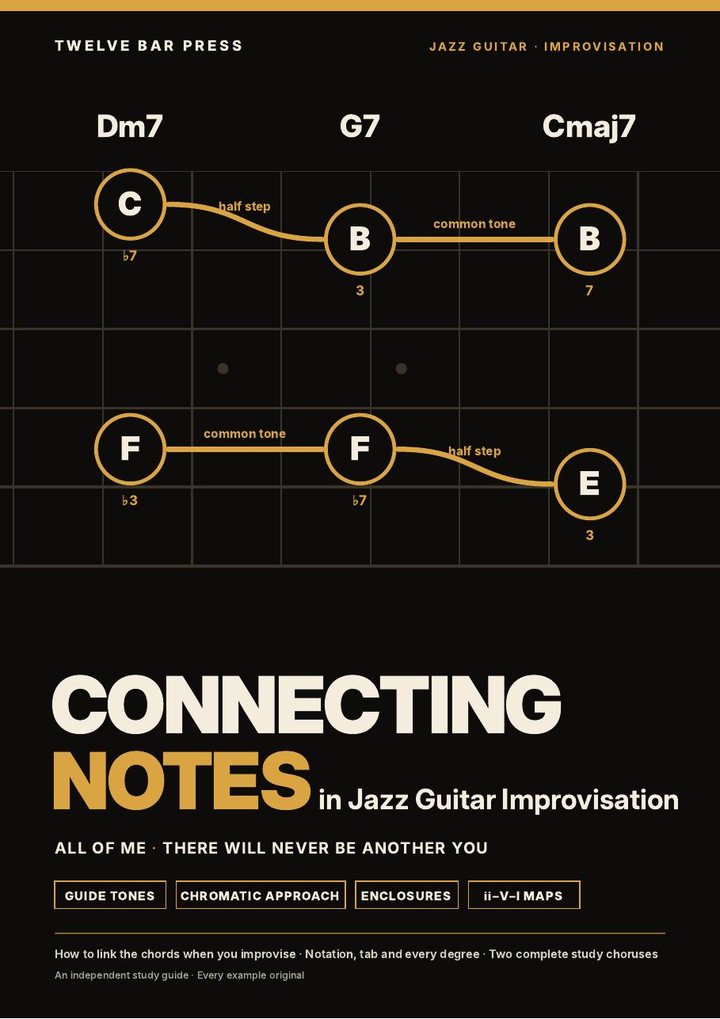
Something beautiful happens when you play only the guide tones through a progression: they move by very small steps. In a ii–V–I, the 7th of each chord falls a half step to the 3rd of the next one — C (the 7th of Dm7) falls to B (the 3rd of G7), and F (the 7th of G7) falls to E (the 3rd of Cmaj7). This little melody is called a guide-tone line, and almost every great jazz phrase is built around one.
The half-step rule
From guide-tone lines comes the most useful rule for playing over changes: when the chord changes, move to the nearest note of the new chord, ideally by a half step. A half step is the strongest movement in tonal music; the ear feels it as a resolution. Instead of jumping to the root of every new chord, look for the chord tone that is one fret away from where you are. Our book Connecting Notes in Jazz Guitar Improvisation is built entirely on this idea and applies it, bar by bar, to two swing standards.
Target notes: aim for the downbeat
A target note is the chord tone you want to land on at the moment the chord changes, usually on beat one of the bar. Think of your line as a road: you can wander anywhere in the middle of the bar, but at the bar line you need to arrive at a specific address. Choose the target first, then work out how to get there. This single habit — target first, line second — is what separates players who follow the changes from players who run scales.
Approach notes and enclosures
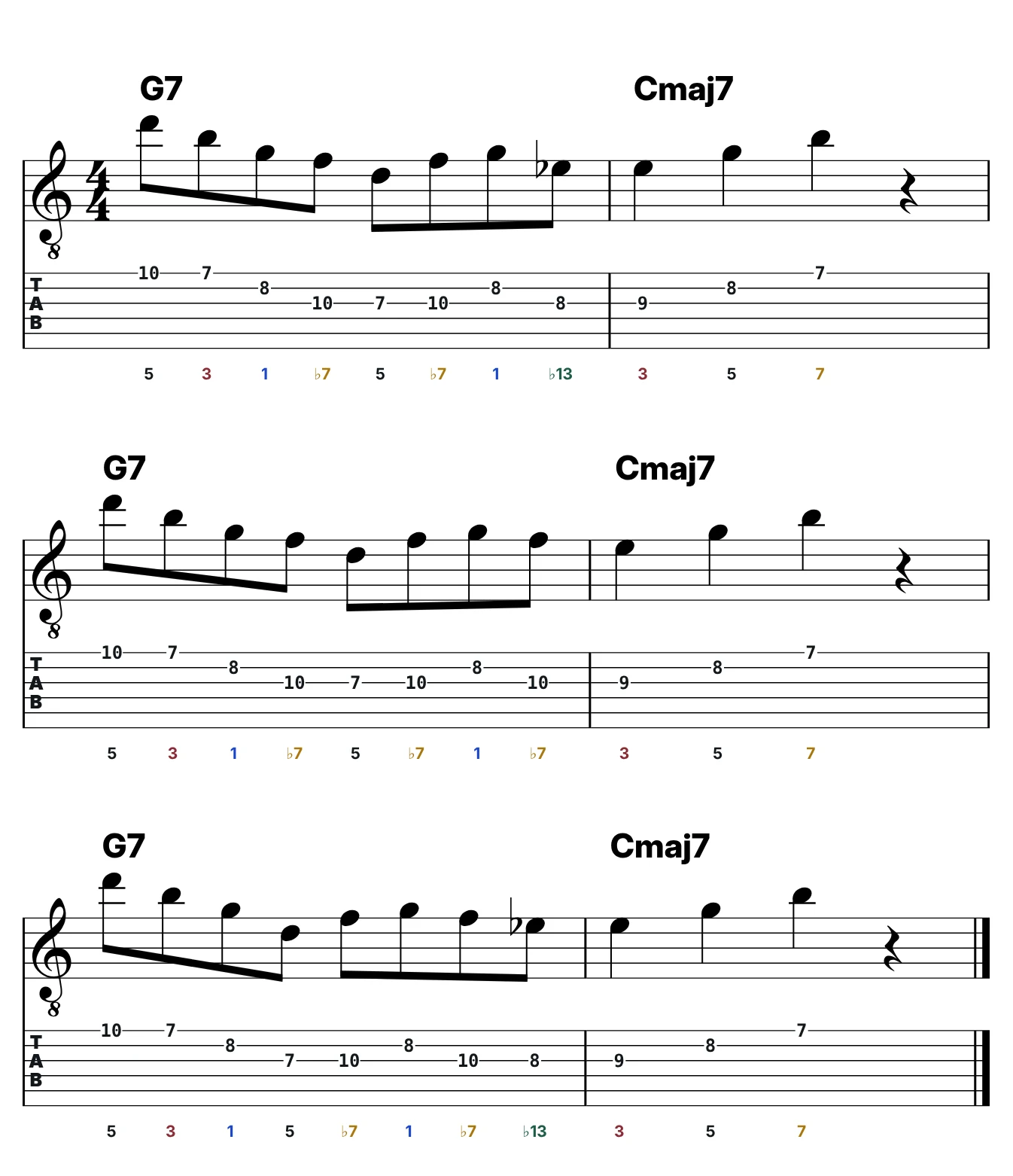
Once you have a target, you can decorate the arrival. An approach note is a note a half step below or above the target, played just before it. An enclosure surrounds the target: one note above it and one below it (or the reverse) before landing. Both devices add tension right before the resolution, which makes the arrival sound stronger.
Example 2 lands on E, the 3rd of Cmaj7, in three ways: from a half step below (D♯), from a half step above (F) and with an enclosure (F above, D♯ below).
Connecting arpeggios through the changes
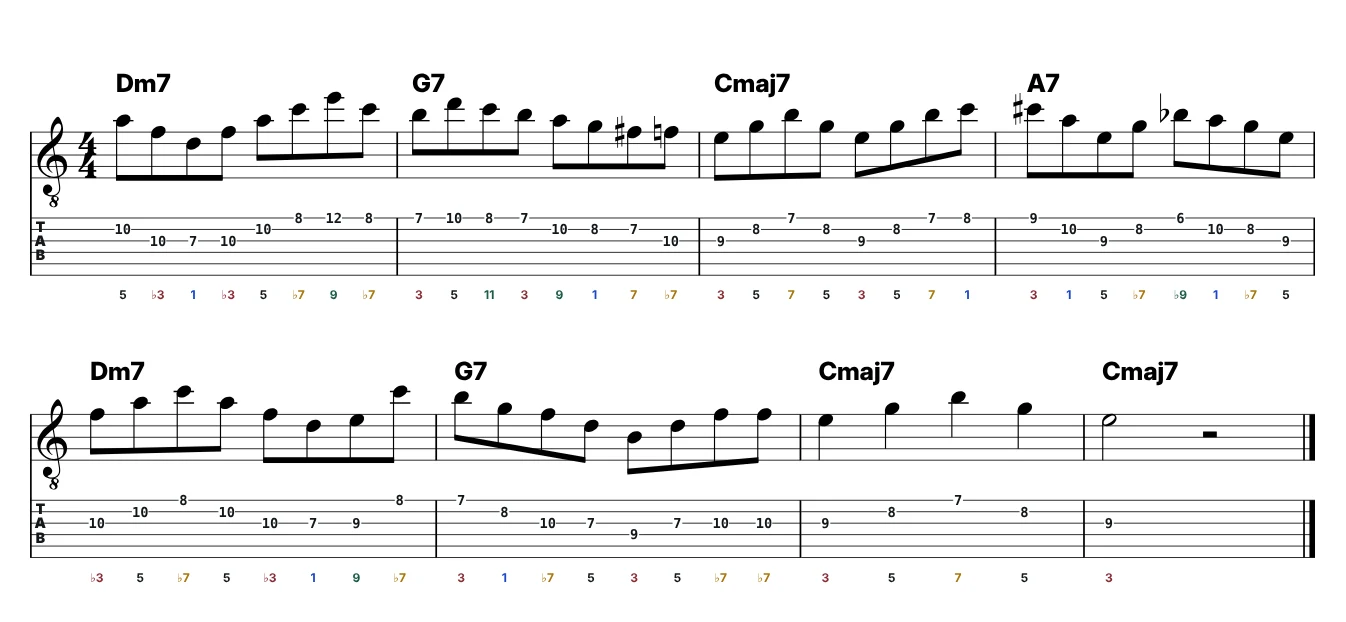
Now put everything together. In Example 3, every bar starts on a chord tone of the new chord, and the last note of each bar is a half step or a common tone away from the first note of the next. Read the degrees under the TAB: the strong beats are full of 3rds and 7ths, and the bar lines are crossed by half steps — C to B, F to E, C to C♯.
Anticipate the next chord
Experienced players often start playing the next chord a little early — on the last eighth note of the bar — so the new harmony arrives in the melody before it arrives in the band. This is called anticipation, and it gives your lines forward motion. Start doing it only after the basic targeting is automatic; otherwise it simply sounds like you are early.
A step-by-step method to practice playing over changes
- Play the guide tones of a progression in whole notes, one per bar.
- Play them in half notes: the 3rd, then the 7th of each chord.
- Play quarter notes, landing on a 3rd or 7th on every beat one.
- Fill the bars with eighth notes, keeping the target on beat one.
- Add approach notes and enclosures before each target.
- Repeat on a real tune: a jazz blues, then a standard such as “All of Me” or “Autumn Leaves.”
Common mistakes when soloing over chord changes
- Thinking only in scales. Scales tell you which notes are available, not which ones matter. Think chords first.
- Landing on the root every time. The root is correct but bland. The 3rd and 7th sound more like jazz.
- Losing your place in the form. Count bars, sing the bass notes, and know which chord comes next.
- Approach notes on the wrong beat. The chromatic note goes before the beat; the target goes on it.
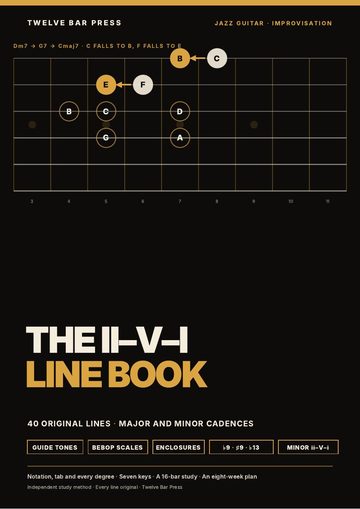
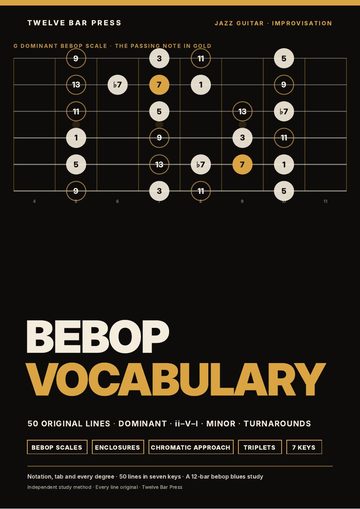
For more on choosing notes, read what scales to use for jazz guitar. For ready-made lines that follow these rules, see The II–V–I Line Book and Bebop Vocabulary.
Frequently asked questions
What does “playing the changes” mean in jazz?
It means improvising lines that follow each chord of the progression, so the melody itself outlines the harmony. The main tools are chord tones, guide tones and target notes.
What are guide tones in jazz?
Guide tones are the 3rd and the 7th of a chord. They define its quality (major, minor or dominant) and move by small steps from one chord to the next, so they form the skeleton of a jazz line.
What is the best way to practice chord tone soloing?
Start with guide tones in whole notes, then half notes and quarter notes, always landing on a 3rd or 7th on beat one. Add eighth notes and approach notes only when the targets are automatic.
Should I think of scales or chords when I improvise?
Think of chords first and use scales to connect the chord tones. Scales give you the available notes; chord tones tell you which notes matter at each moment.