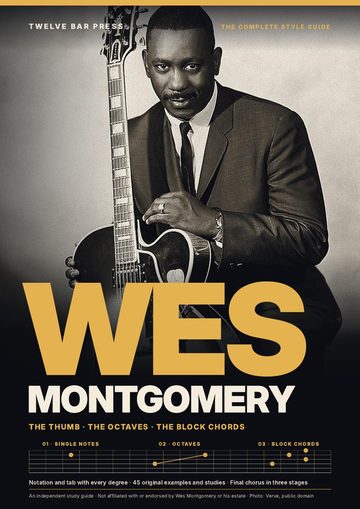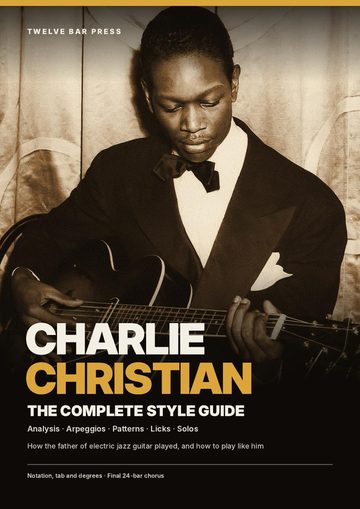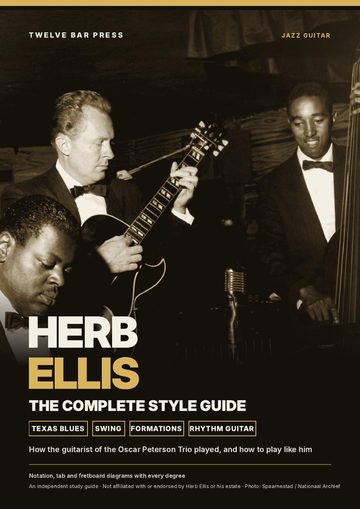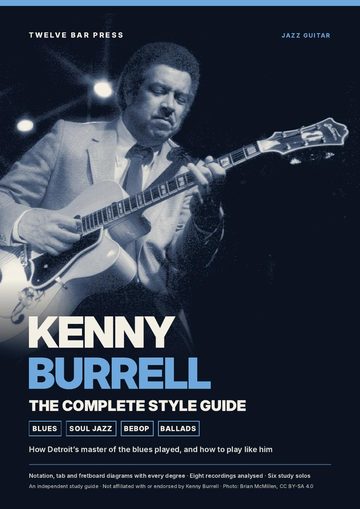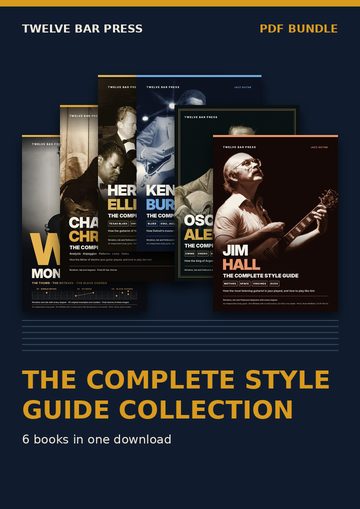
The Complete Style Guide Collection
$44.99$71.94
Artist Style Guides
Motifs, space, voicings and the art of playing in a duo
Jazz Guitar Books. Online store · 29 pages · PDF · Updated
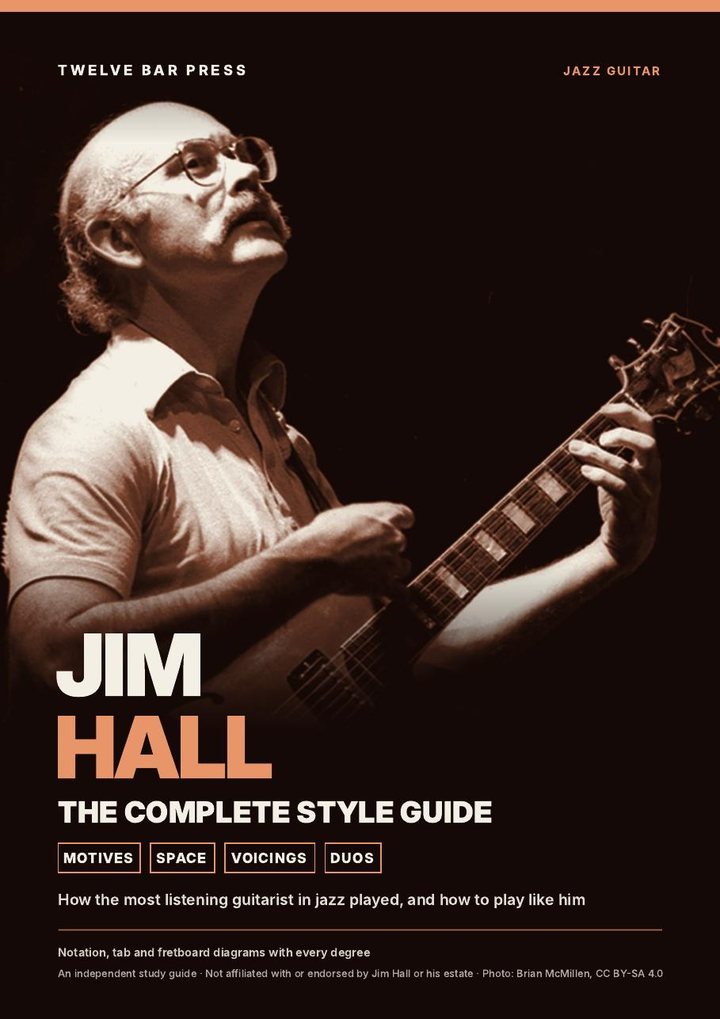
Jim Hall: The Complete Style Guide is a 29-page PDF jazz guitar style guide from Jazz Guitar Books. Online store that teaches Jim Hall’s motivic development, his comping and harmonized bass lines, and eight ii–V–I devices. It includes licks, a recordings guide and three study solos. Every example is written in standard notation, TAB and chord degrees, for intermediate to advanced guitarists.
Jim Hall showed generations of guitarists how to make a solo tell a story. This Jim Hall guitar style guide teaches motivic development step by step: how to take one short idea and grow a whole chorus from it by repeating, displacing, inverting and answering it.
You also learn his comping and harmonized bass lines — the skills that made him the ideal duo partner — and eight ii–V–I devices he used again and again, each in a phrase. The book closes with licks, a recordings guide and three study solos, including a blues told as two questions and an answer.
Every example is in standard notation with rhythm, guitar TAB and the degree of every note.
For intermediate to advanced guitarists who already play over changes and want their solos to sound more melodic, more conversational and less like scales.
Each example is written in standard notation with its rhythm (guitar sounds an octave lower than written) and in TAB, with the degree of every note against the chord printed under it and colored by function. Fretboard diagrams show shapes and positions.
The PDF is licensed to the buyer for personal study. You may print it for your own use and keep it on all your devices. See the license terms.
This is an independent study guide. It is not affiliated with or endorsed by the artist, the estate or the record labels. Recordings are discussed in words; every musical example is written out in notation and TAB.
Mostly ideas: how to develop a motif, use space and comp in a duo. The technique needed is moderate.
No. All examples are written in his style; the recordings are discussed in words.
Building a solo from a short melodic idea that you repeat and vary, instead of running scales. The book teaches it step by step.